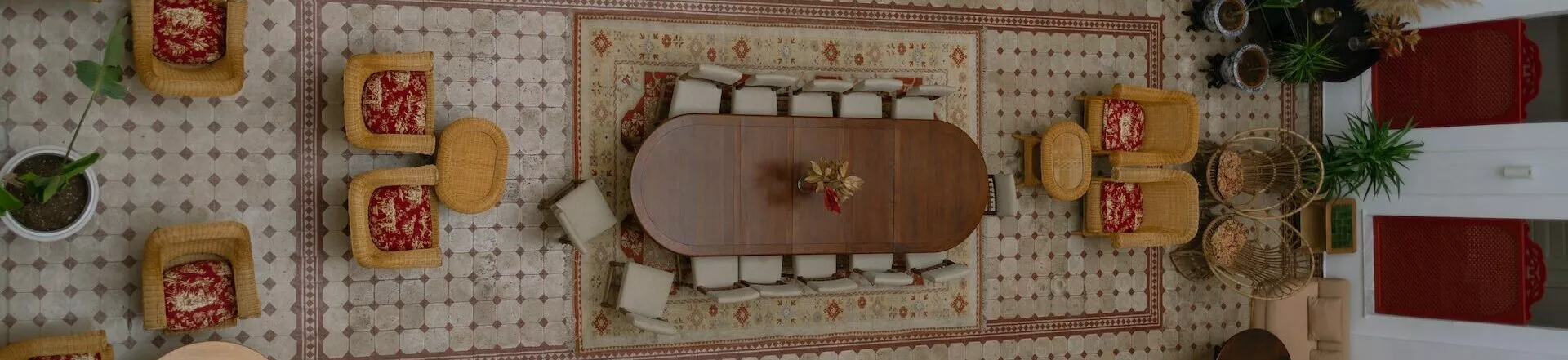
The Moroccan Riad Fes, Marrakesh, Ouarzazate
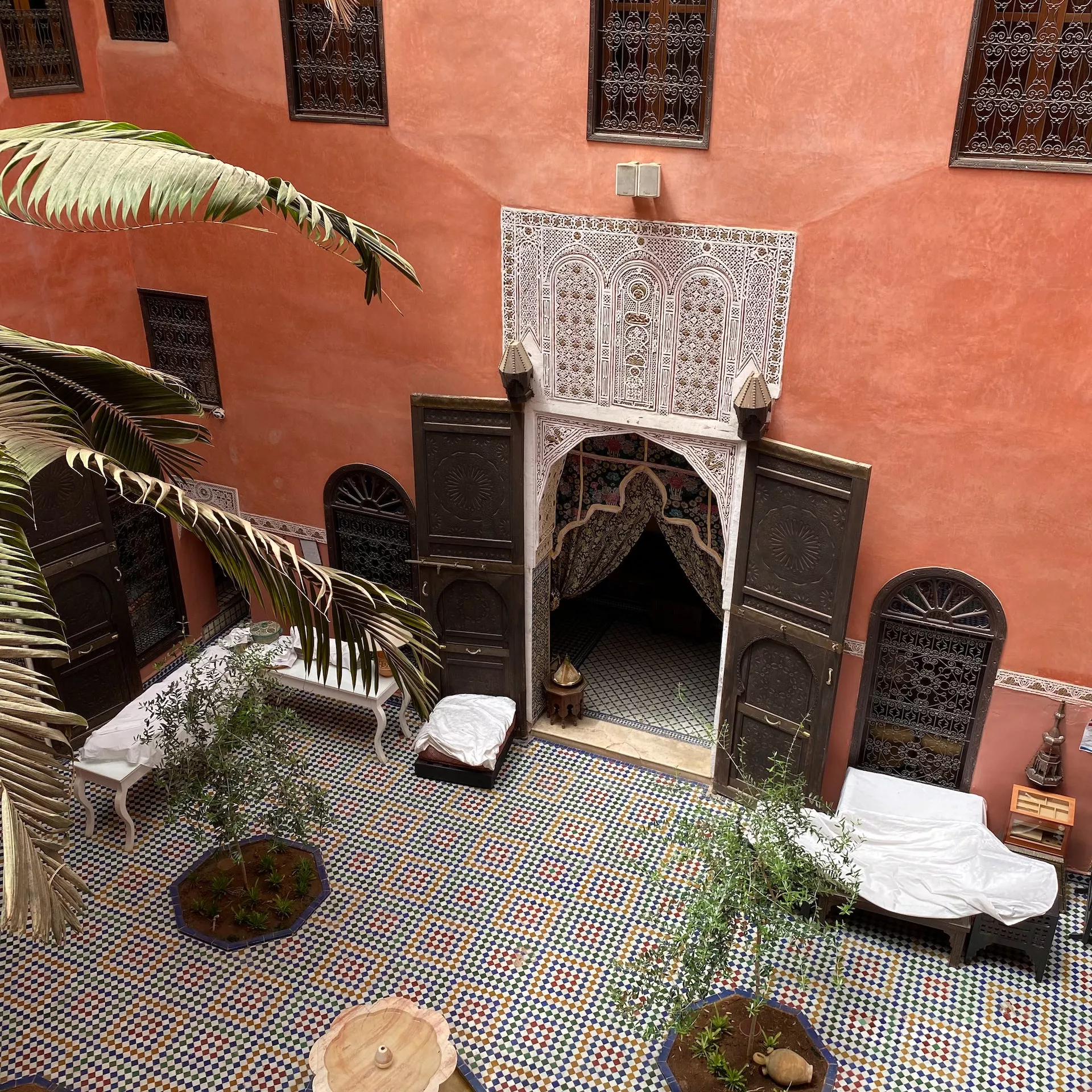
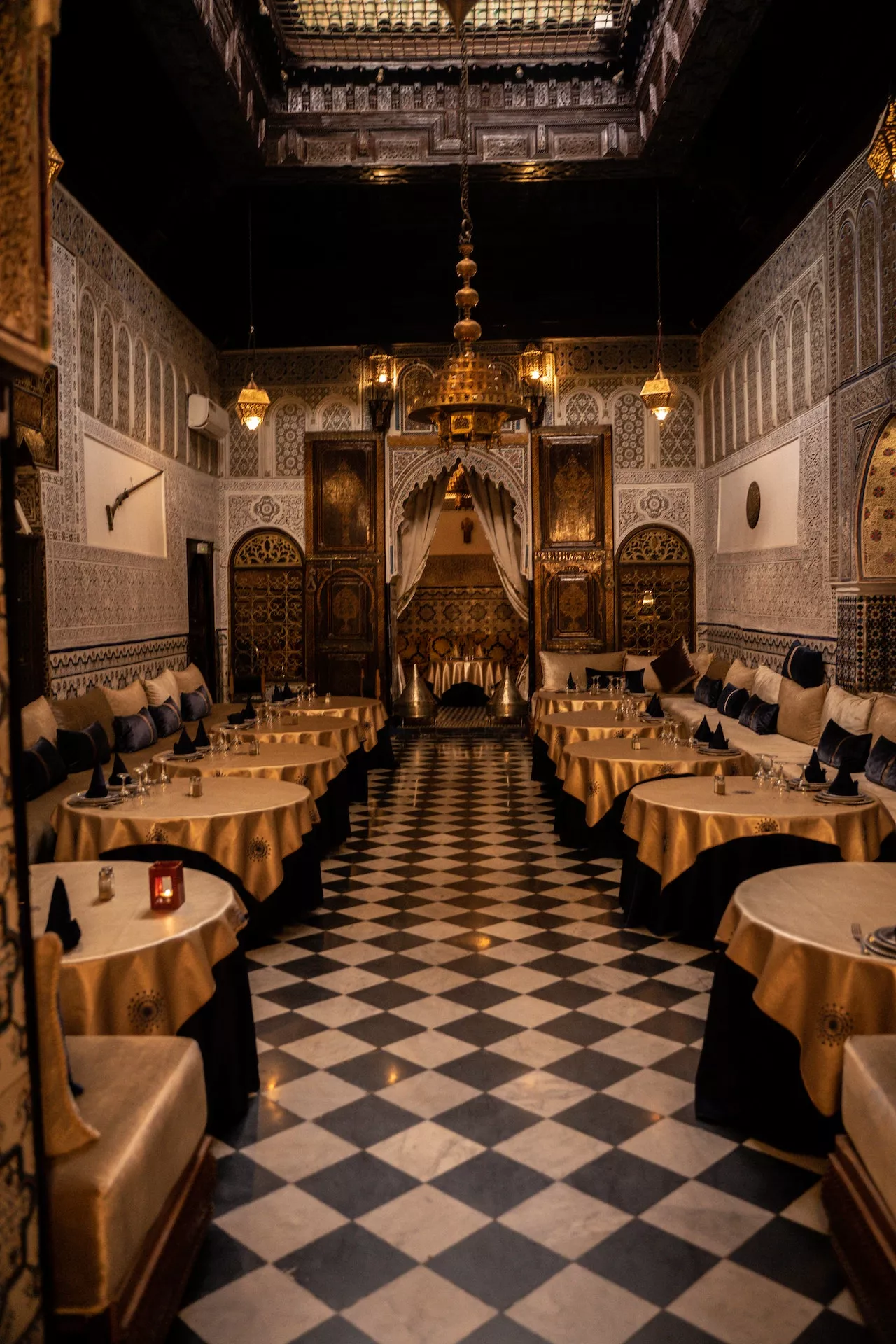
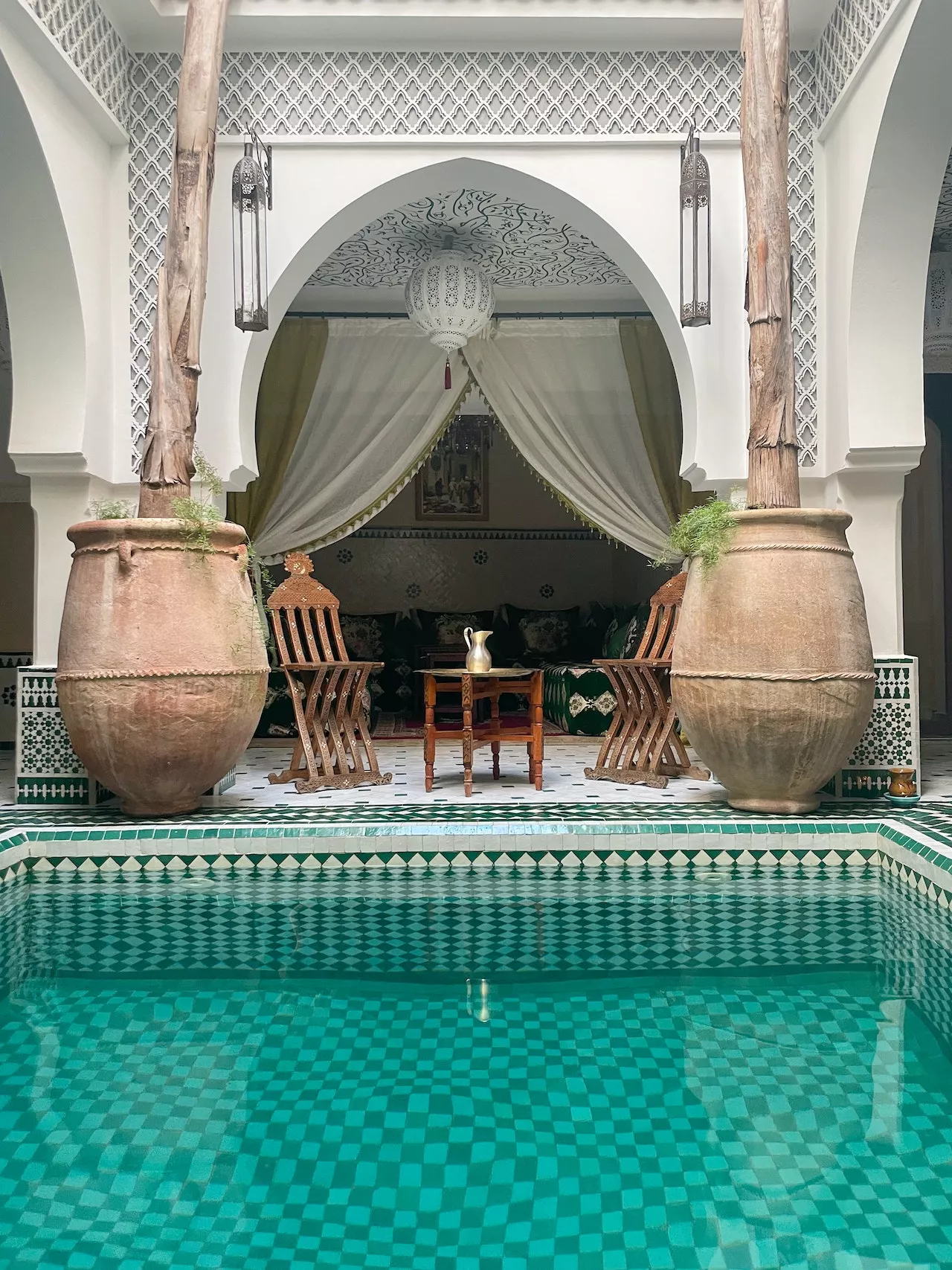
The Moroccan Riad Fes, Marrakesh, Ouarzazate
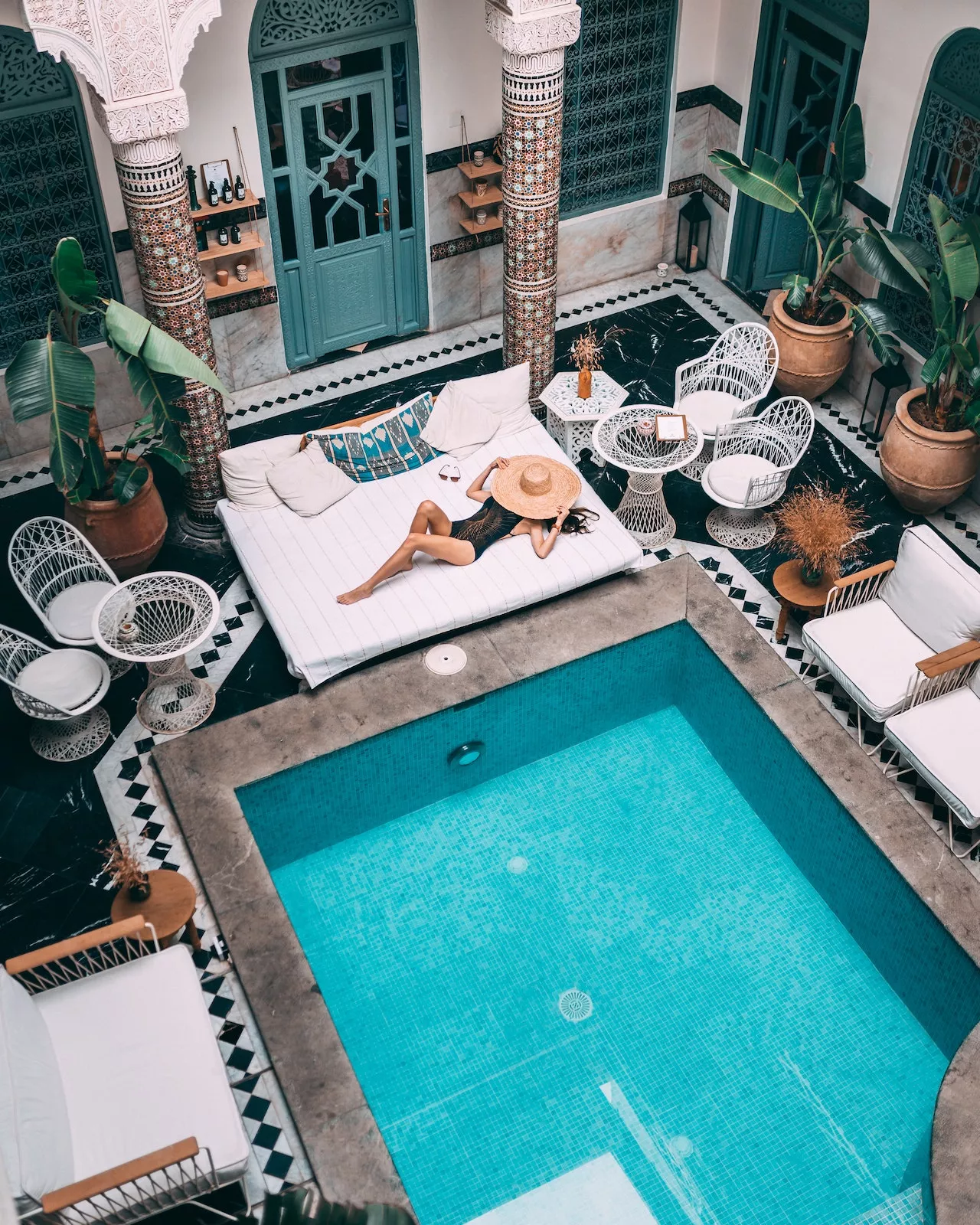
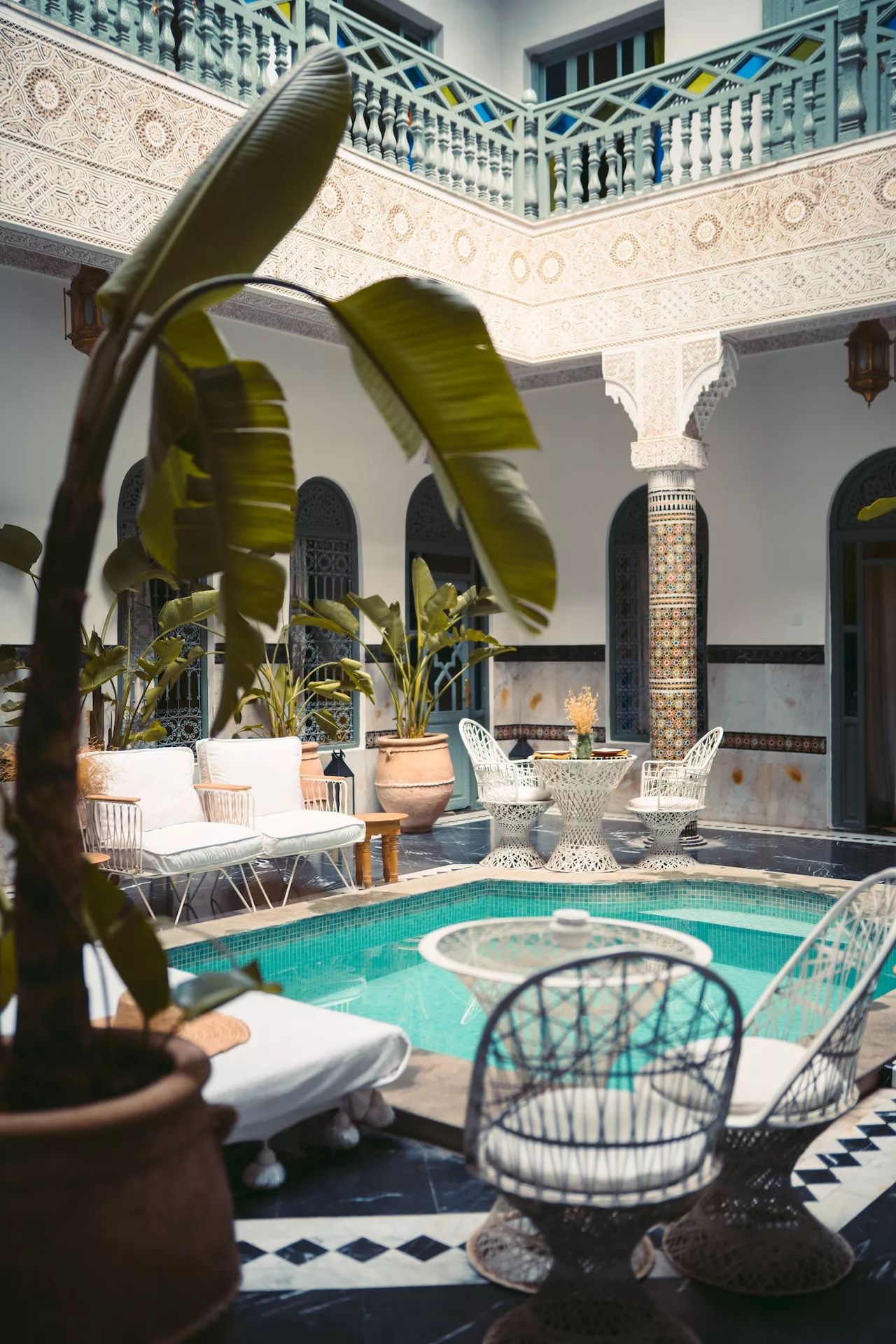
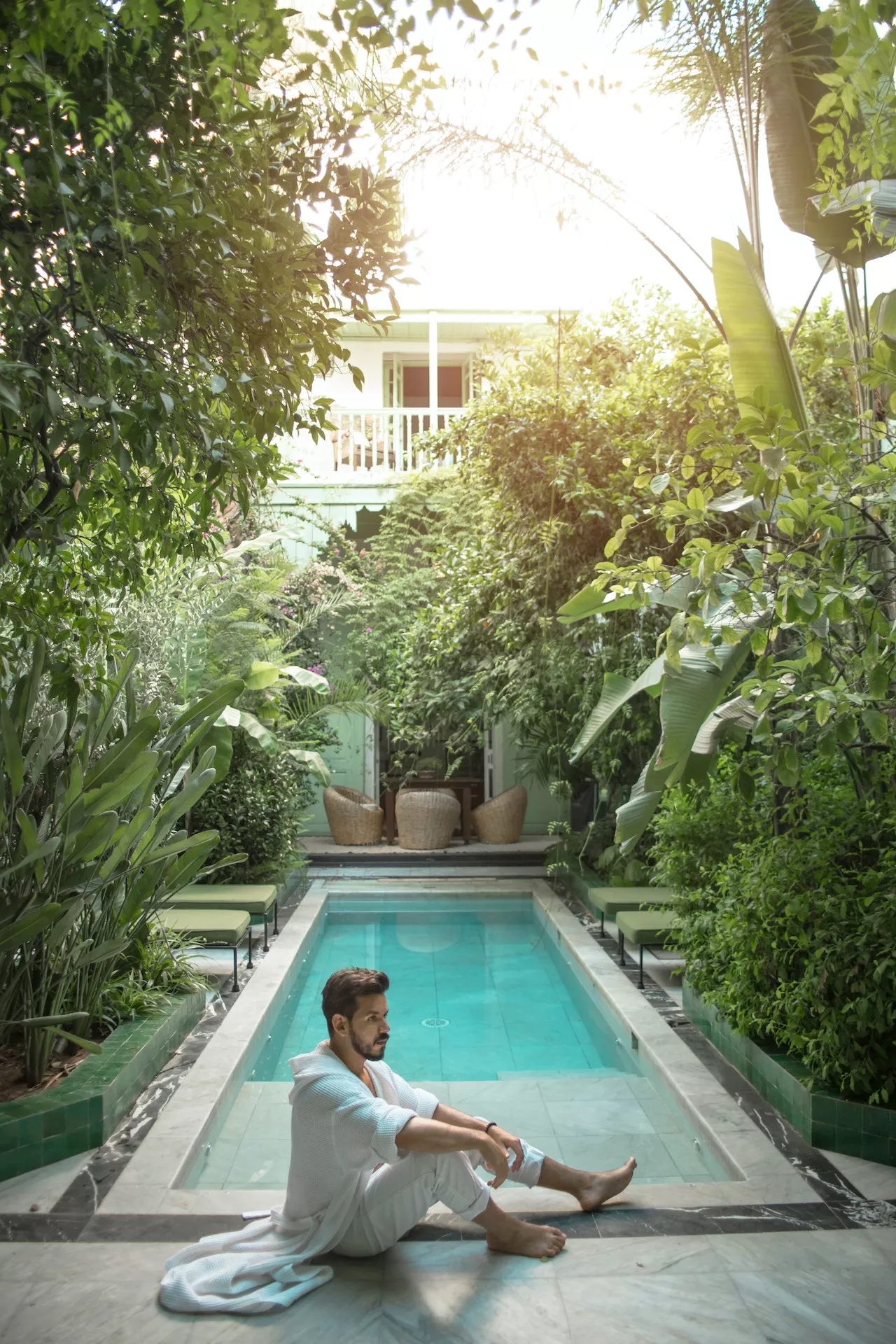
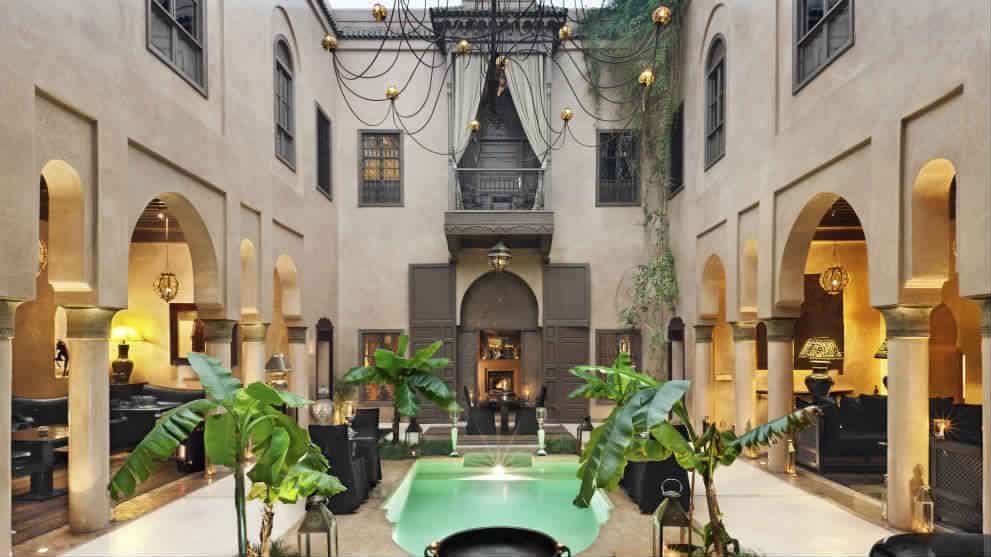
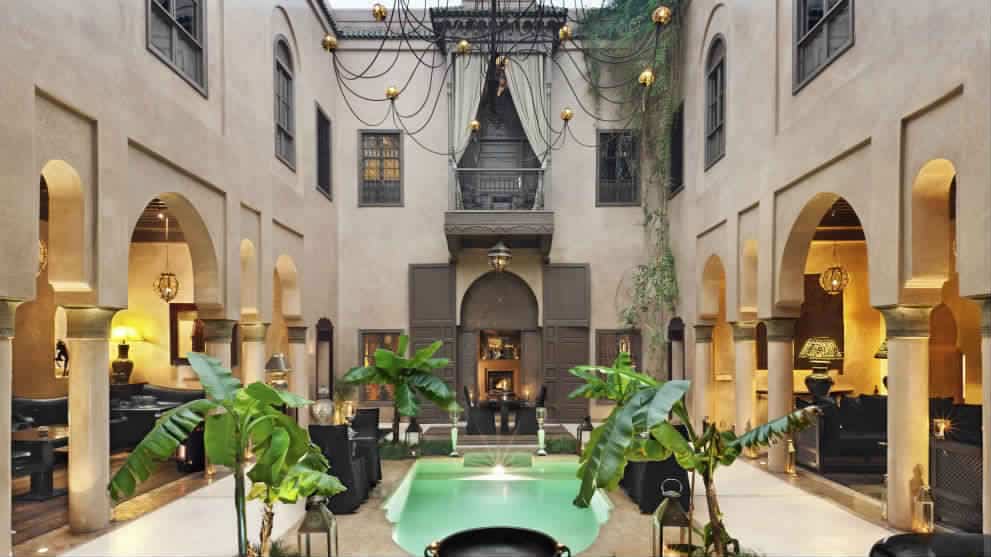
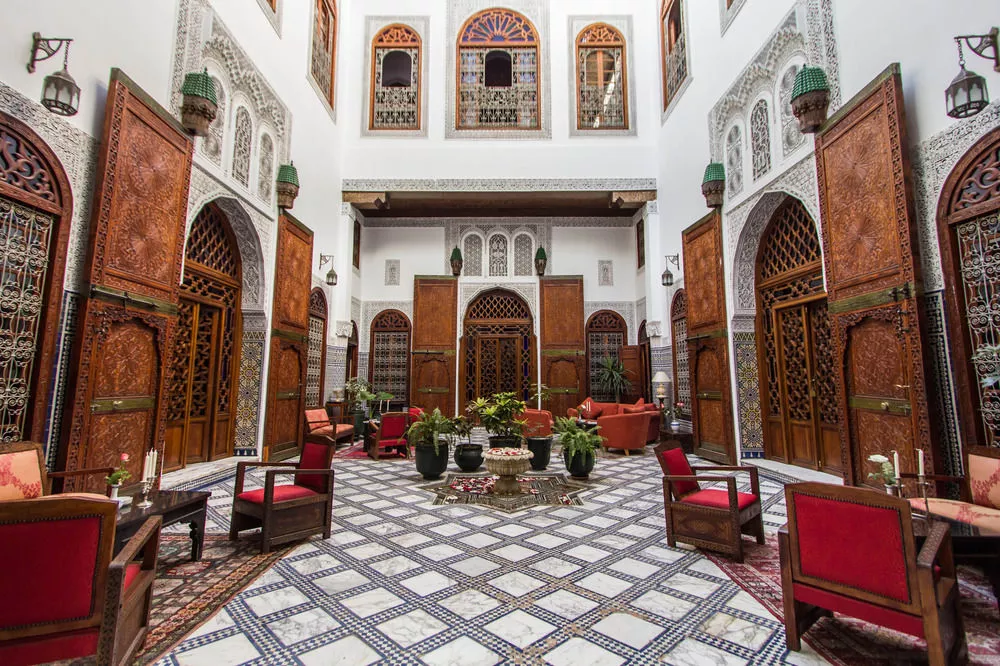
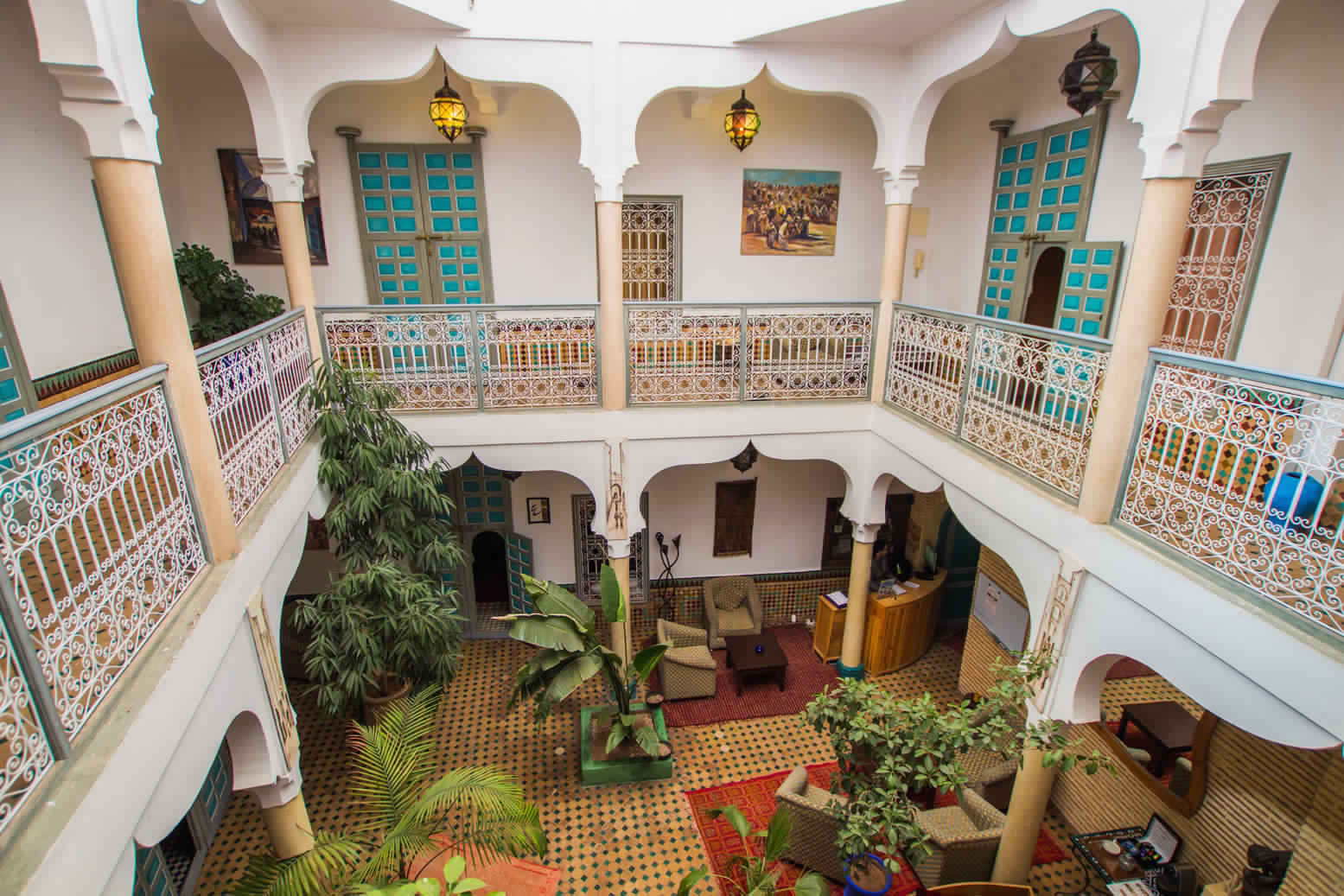
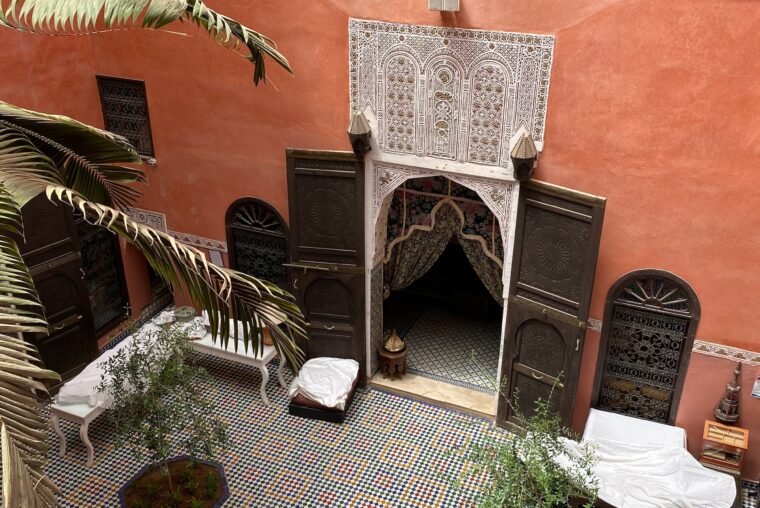
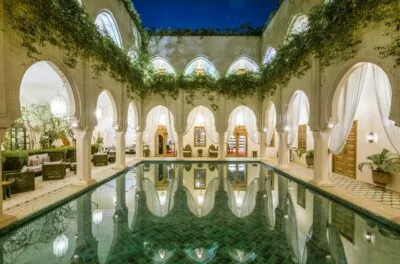
The Moroccan Riad Fes, Marrakesh, Ouarzazate. A Riad is a traditional Moroccan house or palace with an interior garden or courtyard. The word riad comes from the Arabic term for garden, “riad”.
The ancient Roman city of Volubilis provides a reference for the beginnings of riad architecture during the rule of the Idrisid Dynasty. An important design concern was Islamic notions of privacy for women inside residential gardens.
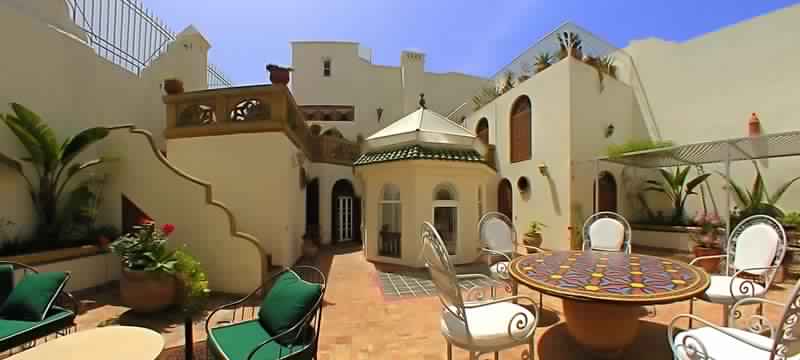
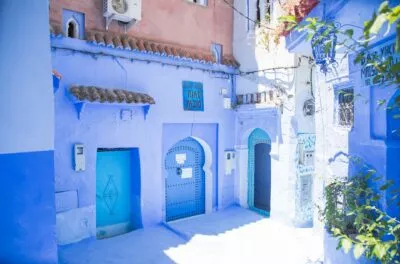
The riads were inward-focused, which allowed for family privacy and protection from the weather in Morocco. This inward focus was expressed in the central location of most of the interior gardens and courtyards and the lack of large windows on the exterior clay or mud brick walls. This design principle found support in Islamic notions of privacy and hijab for women.
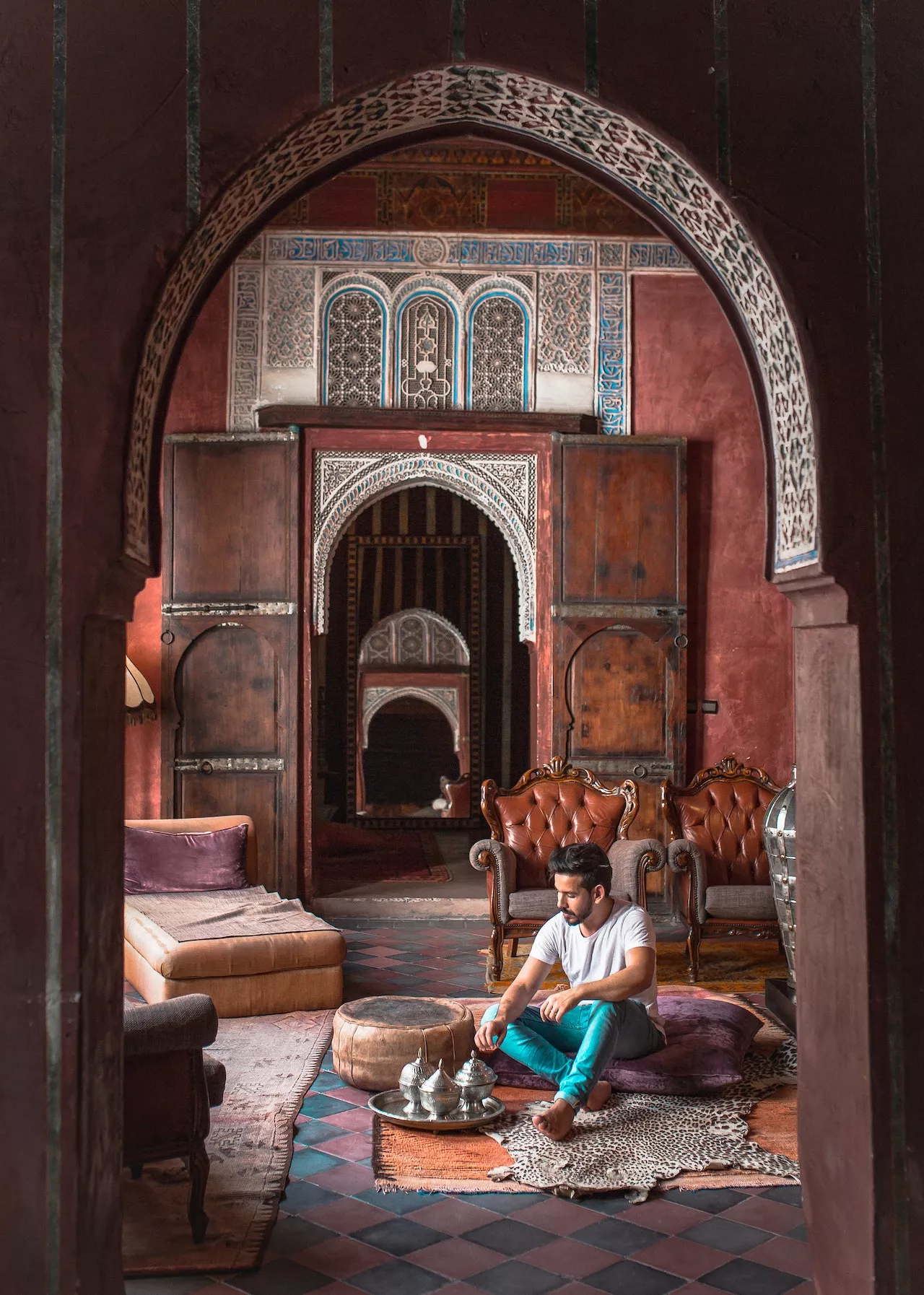
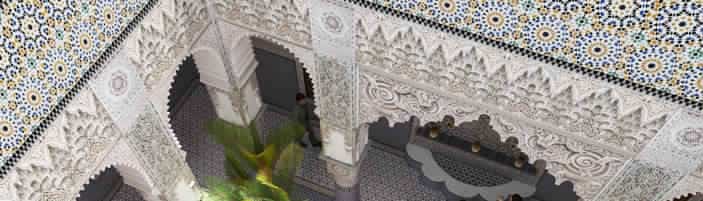
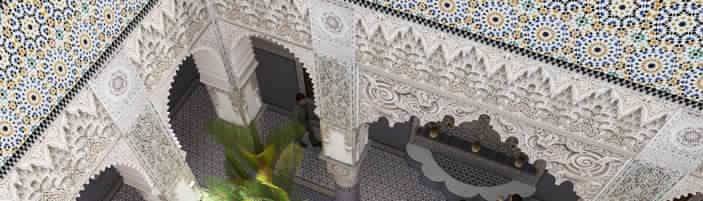
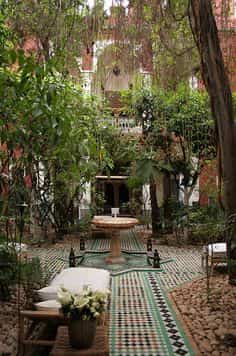
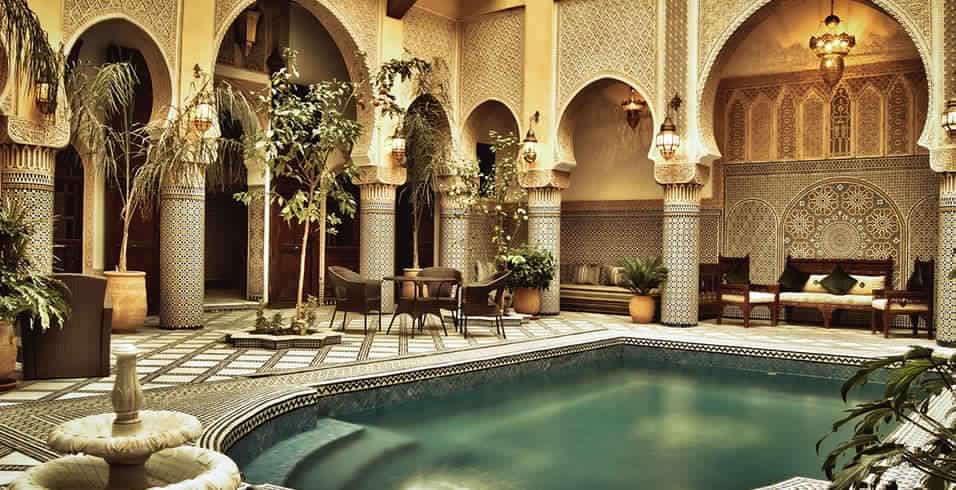
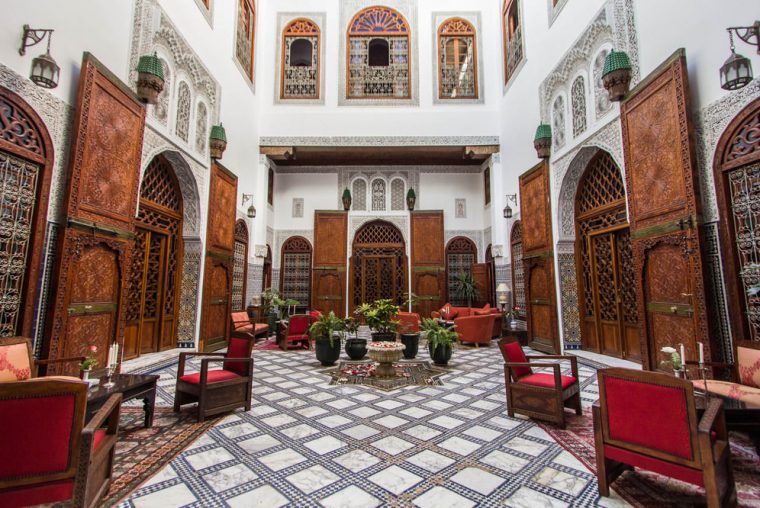
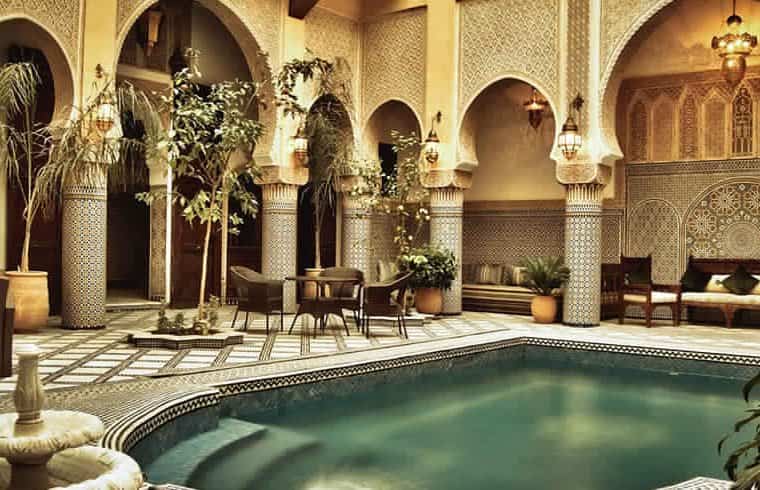
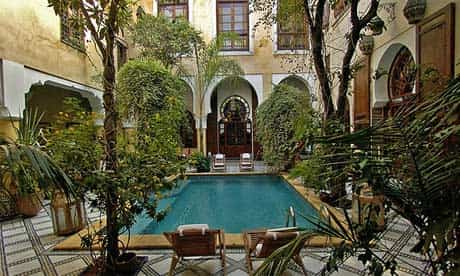
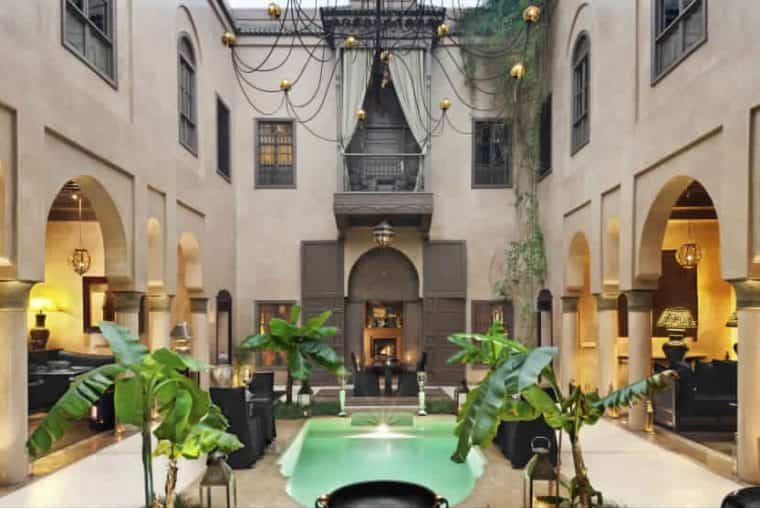
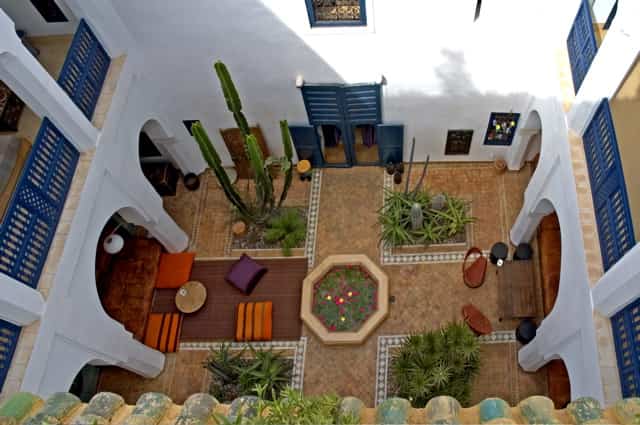
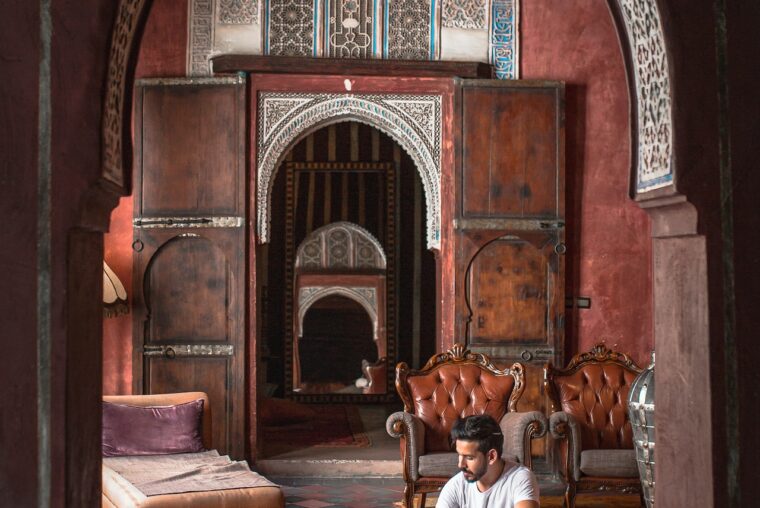
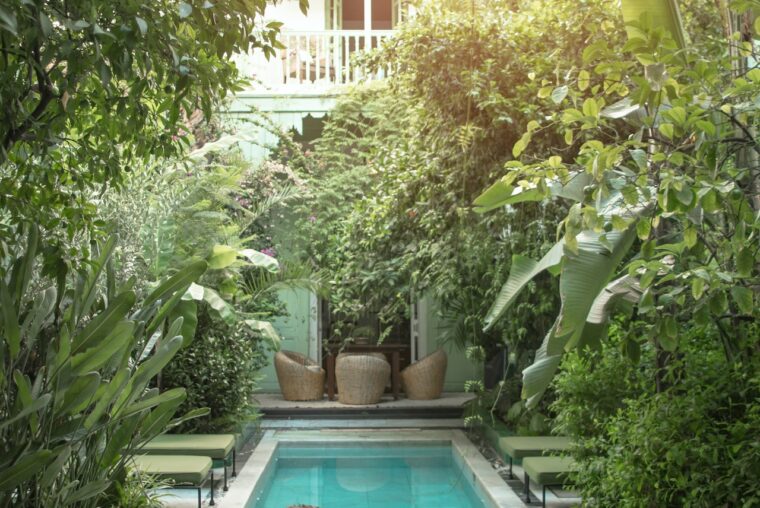
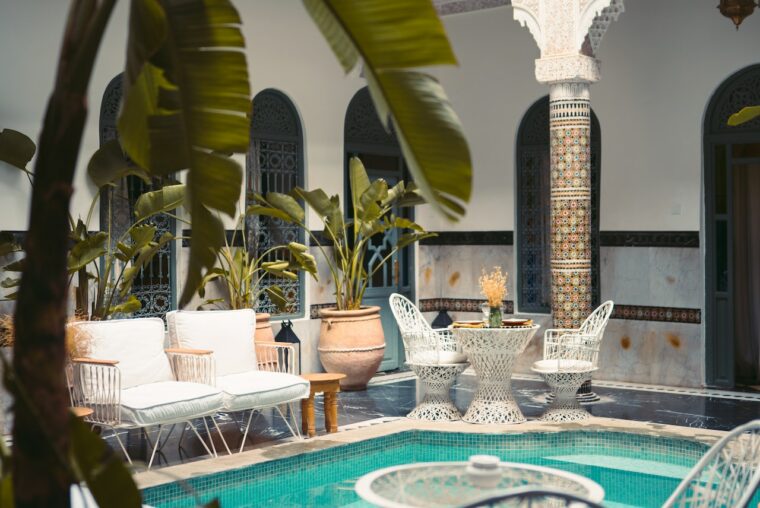
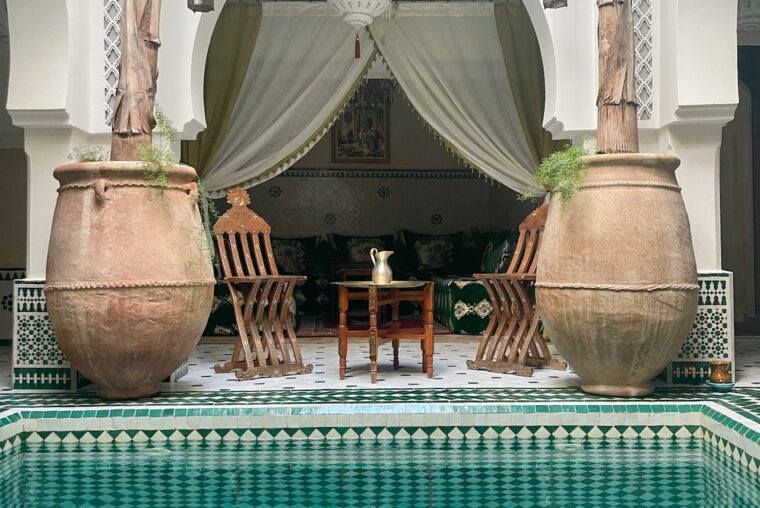
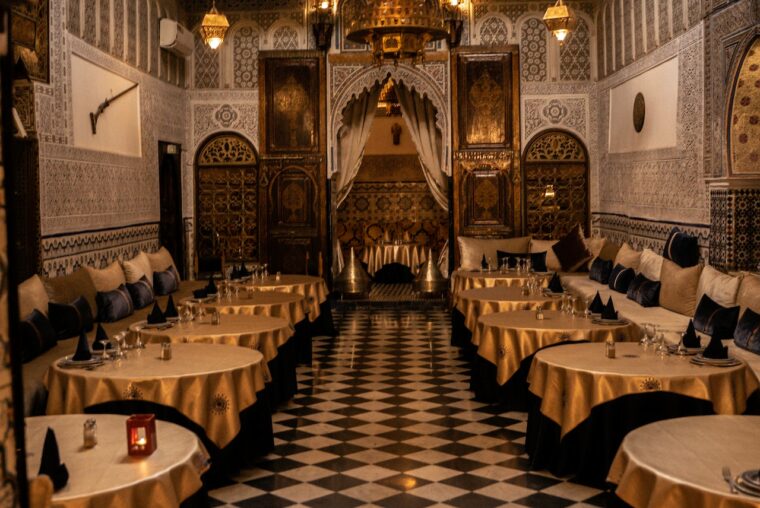
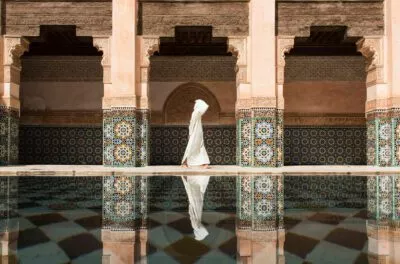
In the central garden of traditional riads, there are often four orange or lemon trees and possibly a fountain. The walls of the riads are adorned with tadelakt plaster and zellige tiles, usually with Arabic calligraphy, with quotes from the Quran.
The style of these riads has changed over the years, but the basic form is still used in designs today. Fes alone has more than 500 riads.
Why Stay in a Riad
A riad puts you behind an unmarked door in the old medina, in a courtyard house built around a garden instead of facing the street. It’s a different way to experience a Moroccan city than a hotel room offers.
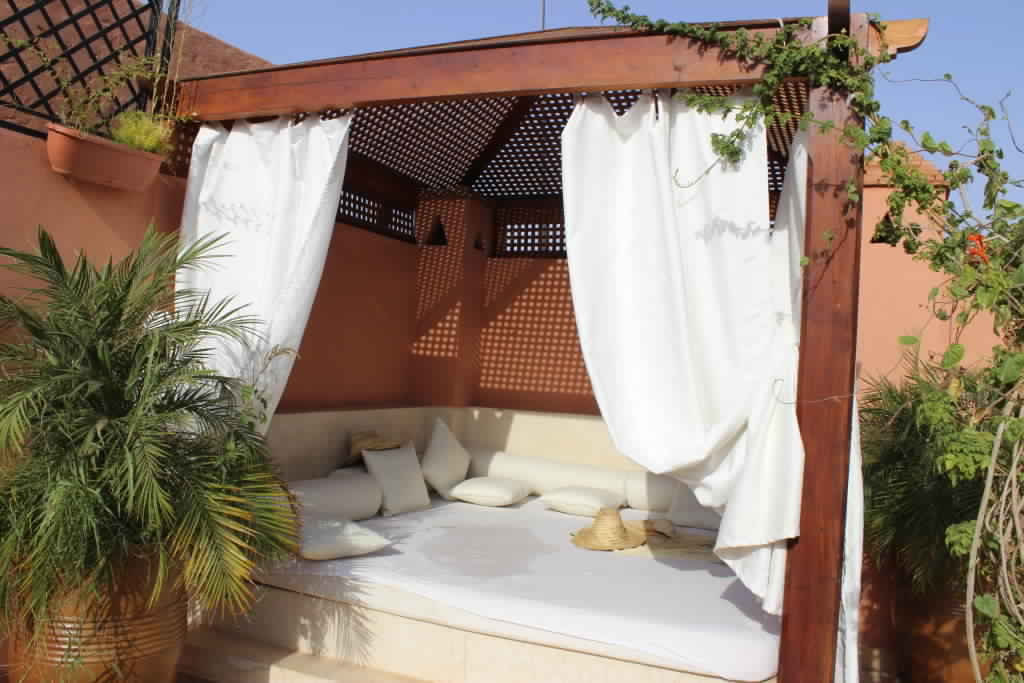
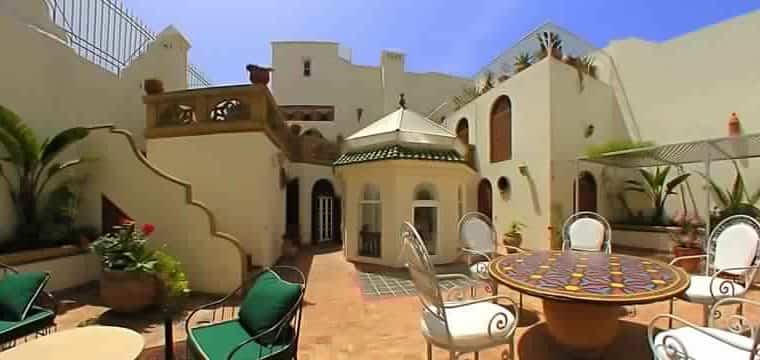
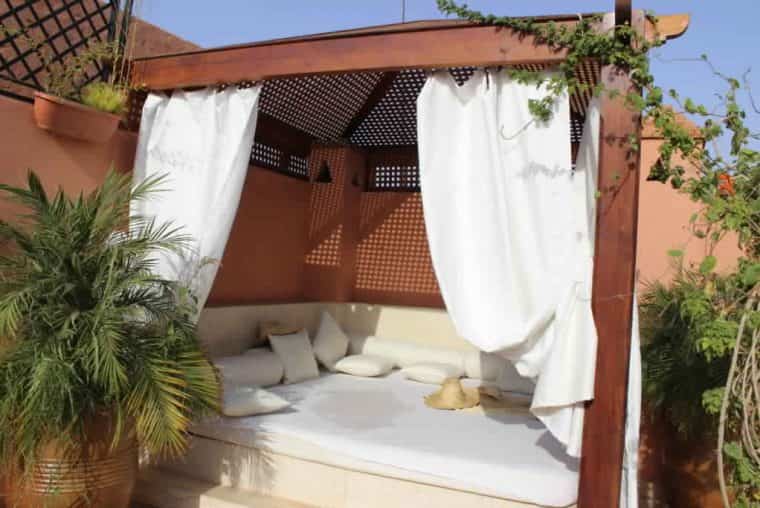
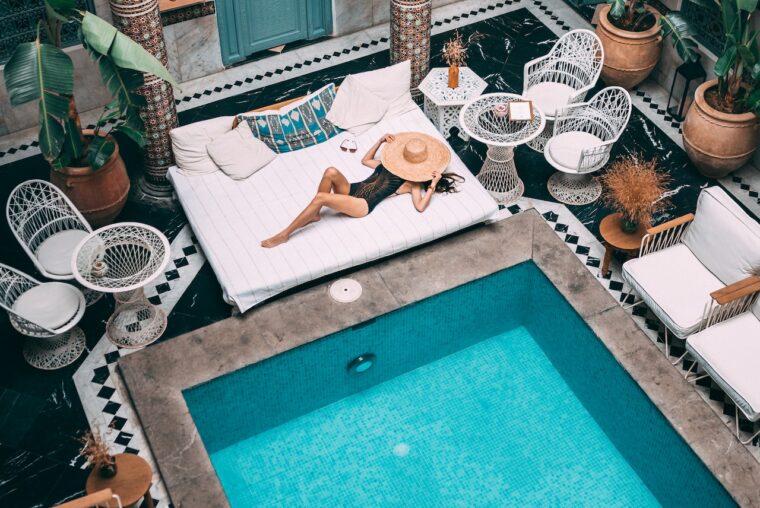
Riads keep the features that have made this style of house work for centuries: zellige tilework, carved plaster, and carved wood ceilings around a central courtyard that often has orange or lemon trees and a small fountain. Most have a rooftop terrace with views over the medina or, in some towns, the Atlas Mountains, a good spot for mint tea at sunset.
Because riads have only a handful of rooms, the owners and staff tend to know their guests by name rather than room number. Many will point you to a restaurant or hammam you wouldn’t find on your own, or arrange a cooking class or a guide for the day.
Food is usually part of the stay too. Riads often serve home-cooked meals made from the same recipes and ingredients used in Moroccan households, tagines, pastilla, and other regional dishes.
If you’d rather stay in a riad than a hotel during your trip, several of our tour packages build that in: see the itineraries here.
Tags: Casablanca, Marrakesh, Ouarzazate, The Moroccan Riad Fes
Popular Tour Packages


 Unforgettable - Overall amazing experience. Everything was taken care of so there was nothing we had to worry about. Ismail was so patient with us throughout the 3 days. The accommodations were... read more
 Mona R
02/08/2026- We highly recommend this agency to anyone looking for a well-organized and authentic desert adventure - We had an amazing experience with Private Desert Tours. The organization was absolutely excellent from start to finish. Everything was perfectly arranged, and the team made sure that every detail... read more Cécile M
01/03/2026 - Recommend this tour! - Amazing experience. Ismail is a fantastic guide who is very thoughtful and goes out of his way to make our lives easier. Highly recommend Islamil Cruiser654324
19/10/2025 - private tour with Private Desert Tours was exceptional from start to finish. We traveled fr - We booked a private tour with Desert Private tours for our 20th anniversary, and it turned out to be the most unforgettable trip we’ve ever taken. The entire experience was... read more sail d
16/11/2025