Best Morocco Desert Tours for Adventure Travelers in 2026
Morocco is having a moment. The country welcomed 18 million tourists in the first eleven months of 2025 alone, a 13.5% jump over the same period the year before, and tourism revenue had already topped the entirety of 2024 by October (Morocco World News, Dec. 2, 2025) , for travelers who looking for the best Morocco desert tours , that growth means more tour operators, more route options for offer Morocco desert tours, and more price variation than ever, which also means more room to overpay or end up with a rushed, poorly run trip.
This guide is built specifically for travelers chasing Sahara dunes, camel treks, and Atlas Mountain trails, not riad-hopping or spa weekends. It breaks down what a private desert tour actually costs by tier, when to go, which routes fit which trip length, how safe the experience really is for solo and female travelers, and how to spot an operator that treats its camels, guides, and the desert itself with respect. We’re Private Desert Tours, a local, family-run operator that runs 100% private desert and Atlas Mountain itineraries out of the Sahara itself, so where it’s useful we’ve pointed to our own routes as concrete, real-world examples alongside the wider market data.
Want a route built entirely around your own dates and interests instead of picking from a fixed list? See our customized Morocco tour planner.
Key Takeaways
- Private Morocco desert tours range from roughly $250-500 per person for a standard 3-day trip to $1,200+ for a luxury multi-day camp experience; most adventure travelers get the best value in the $450-800 range for a 4-day private route.
- October-November and March-April are the most comfortable months in Merzouga, with daytime highs of 24-30°C (75-86°F); July averages a punishing 43°C (109°F).
- The classic 3-day Marrakech-Merzouga loop is the most popular route, but 4-day itineraries through Zagora or the Dades Gorge add meaningfully more scenery per travel day.
- Solo and female travelers regularly complete Morocco desert tours safely, but route choice, operator vetting, and a few practical precautions matter more here than in many other destinations.
- Morocco recorded roughly 19.8 million tourist arrivals in 2025 per government data cited by Morocco World News and Ecofin Agency, and travel and tourism contributed 12.2% of national GDP in 2024 (WTTC, 2025). The sector is scaling fast, and booking early during peak months is increasingly worth it.
How Much Does a Morocco Desert Tour Really Cost?
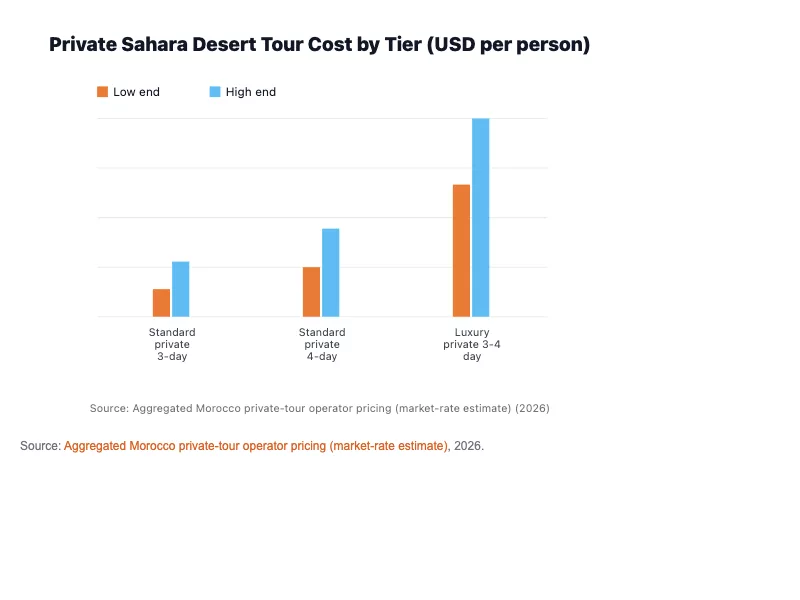
A private Sahara desert tour’s price depends almost entirely on camp quality, vehicle and guide standard, and how much driving is packed into each day, not on the destination itself. Because pricing varies so widely across operators and booking platforms, treat the ranges below as a market-rate estimate rather than a fixed rate card, and always ask an operator for an itemized breakdown before paying a deposit.
| Tier | Typical price (per person) | What’s usually included | What’s usually excluded |
|---|---|---|---|
| Standard private 3-day | $250-500 | Private vehicle and driver-guide, fixed desert camp, most meals, camel trek | Alcohol, some lunches, optional activities (quad biking, sandboarding) |
| Standard private 4-day | $450-800 | Everything above plus an extra route day (Zagora, Dades Gorge, or Toubkal add-on) | Alcohol, travel insurance, entrance fees to kasbahs |
| Luxury private 3-4 day | $1,200-1,800+ | Boutique or luxury desert camp, premium private 4×4, personal guide, all meals, sometimes a private chef | Flights, international travel insurance, premium spa add-ons |
What actually drives the price up within private tours: camp quality (a comfortable fixed camp tent vs. a private ensuite luxury tent with a real bed), vehicle and guide standard (a standard private 4×4 vs. a premium vehicle with extra amenities), and how many stops and activities the route includes. All of the tiers above already include a private vehicle and a dedicated driver-guide; the price difference buys comfort, camp quality, and route depth, not privacy itself.
As a real-world anchor: our own Luxury 3-Day Morocco Tour from Marrakech to Erg Chebbi sits in the standard-to-luxury private band above, at €570 per person as of this writing, and includes the private 4×4, driver-guide, camp, and camel trek as standard, since Private Desert Tours runs 100% private tours at every tier.
Browse our full range of private Morocco tour packages to compare routes, durations, and current pricing.
When Is the Best Time for a Sahara Desert Tour?
October through November and March through April offer the most comfortable conditions for a Sahara trip, with Merzouga daytime highs sitting in the 24-30°C (75-86°F) range (weather-and-climate.com, 2026). These shoulder-season windows also line up with the most pleasant hiking weather in the Atlas Mountains, making them the practical answer for anyone combining desert and trekking in one trip.
Summer is brutal. Merzouga averages a peak daytime high near 43°C (109°F) in July, which turns midday camel treks and dune walks into a genuine heat-safety concern rather than an inconvenience. Winter is the opposite extreme in a different way: January daytime highs average around 19°C (66°F), which sounds mild until the sun goes down and desert night temperatures drop sharply, sometimes near freezing.
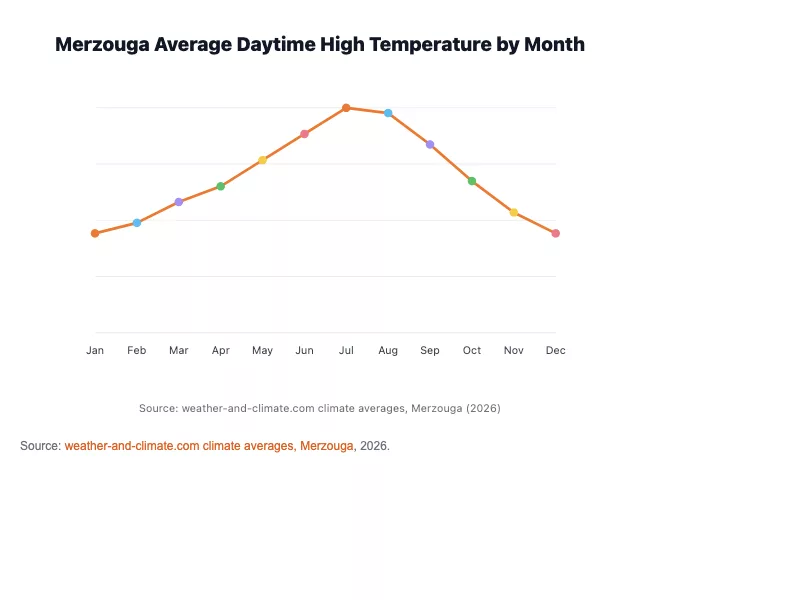
If your trip has to fall in summer, book a tour that reaches camp before midday and plans the camel trek for late afternoon or sunrise instead. If it falls in December or January, pack a genuine down layer for the desert night; camps provide blankets, but the temperature swing from a 19°C day to a near-freezing night surprises a lot of first-time visitors.
Since every Private Desert Tours itinerary is private and flexible on dates, we can also adjust departure timing and daily schedules around the hottest or coldest hours if your travel window falls outside the ideal shoulder seasons. See our Morocco travel guide for more season-by-season planning notes.
The Best Morocco Desert Tours by Route and Duration
Route and trip length matter more than which specific company you book with, since most operators run near-identical itineraries along the same handful of roads. Here’s how the main options stack up.
1. 3-Day Marrakech-Merzouga Loop, Best for First-Timers with Limited Time
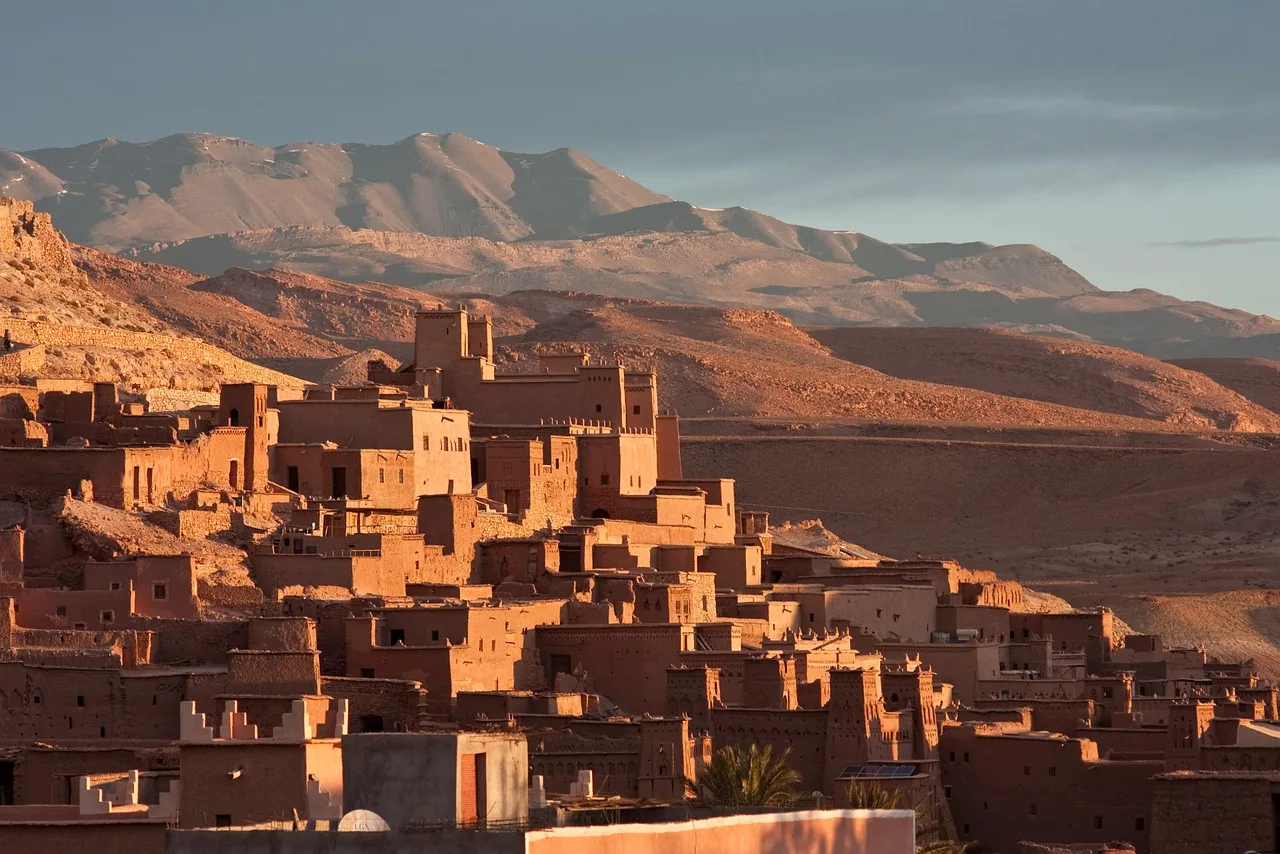
This is the route almost everyone means when they search for the best Morocco desert tour. Day one drives from Marrakech over the Tizi n’Tichka pass to Ait Ben Haddou and Ouarzazate; day two continues through the Dades Valley to Merzouga for a camel trek into Erg Chebbi at sunset; day three drives back to Marrakech (or continues to Fes on the one-way version). It’s the most efficient way to see the dunes if you only have three days, but expect roughly 8-9 hours of driving on the return day. Private Desert Tours runs this exact loop as a fully private itinerary. See the Luxury 3-Day Morocco Tour from Marrakech to Erg Chebbi.
2. 4-Day Marrakech-Merzouga via Zagora and the Dades Gorge, Best for Scenic Variety
Adding a day lets the route split the long drive into shorter legs and detour through Zagora’s palm groves or the dramatic rock formations of the Dades Gorge, depending on the operator’s exact itinerary. This is the tier where mid-range pricing ($450-800) buys real value: less time in the vehicle per day, more time at viewpoints and kasbahs, and a second night that’s often spent in a guesthouse rather than back-to-back long drives.
3. 4-Day Desert Tour with a Toubkal Day-Hike Add-On, Best for Combining Desert and Mountains
Several operators now bolt a day hike or overnight in Imlil onto the standard desert loop, letting adventure travelers get both a Sahara camel trek and a taste of the High Atlas without booking two separate trips. This works best for travelers with a reasonable fitness base; a serious Toubkal summit attempt needs its own multi-day itinerary, covered in the next section.
4. 5-Day Marrakech to Chefchaouen via the Desert, Best for Combining Sahara and the Blue City
A longer, less common route that pairs the classic desert loop with Chefchaouen, Morocco’s famous blue-washed mountain town in the north. It trades a faster return to Marrakech for a genuinely different second half of the trip, more time in the Draa or Dades valleys, an overnight in the Sahara, then a multi-day push north to Chefchaouen’s medina and surrounding Rif Mountains, before looping back. It suits travelers who want both a desert night and a very different cultural stop in one continuous itinerary rather than booking two separate trips. Private Desert Tours runs this as a private desert Morocco tour, 5-Day Desert Tour from Marrakech to Chefchaouen.
For travelers with more time, a 10-day grand itinerary can combine the desert loop, Atlas Mountains, and multiple imperial cities in one trip. Our 10-Day Morocco Tour Package from Marrakech is one example, or we can build a fully customized itinerary around your own dates.
How these routes were selected: this comparison is informed by Private Desert Tours’ own private itineraries linked above, cross-checked against published routes from other Morocco-based operators, traveler trip reports, and route data from Moroccan tourism resources for consistency in driving times and stops. Prices and exact stops should always be confirmed directly with whichever operator you book before paying a deposit.
See more of what fits along these routes in our guide to incredible things to do in Morocco.
Best Morocco Adventure Tours for Atlas Mountains Trekking
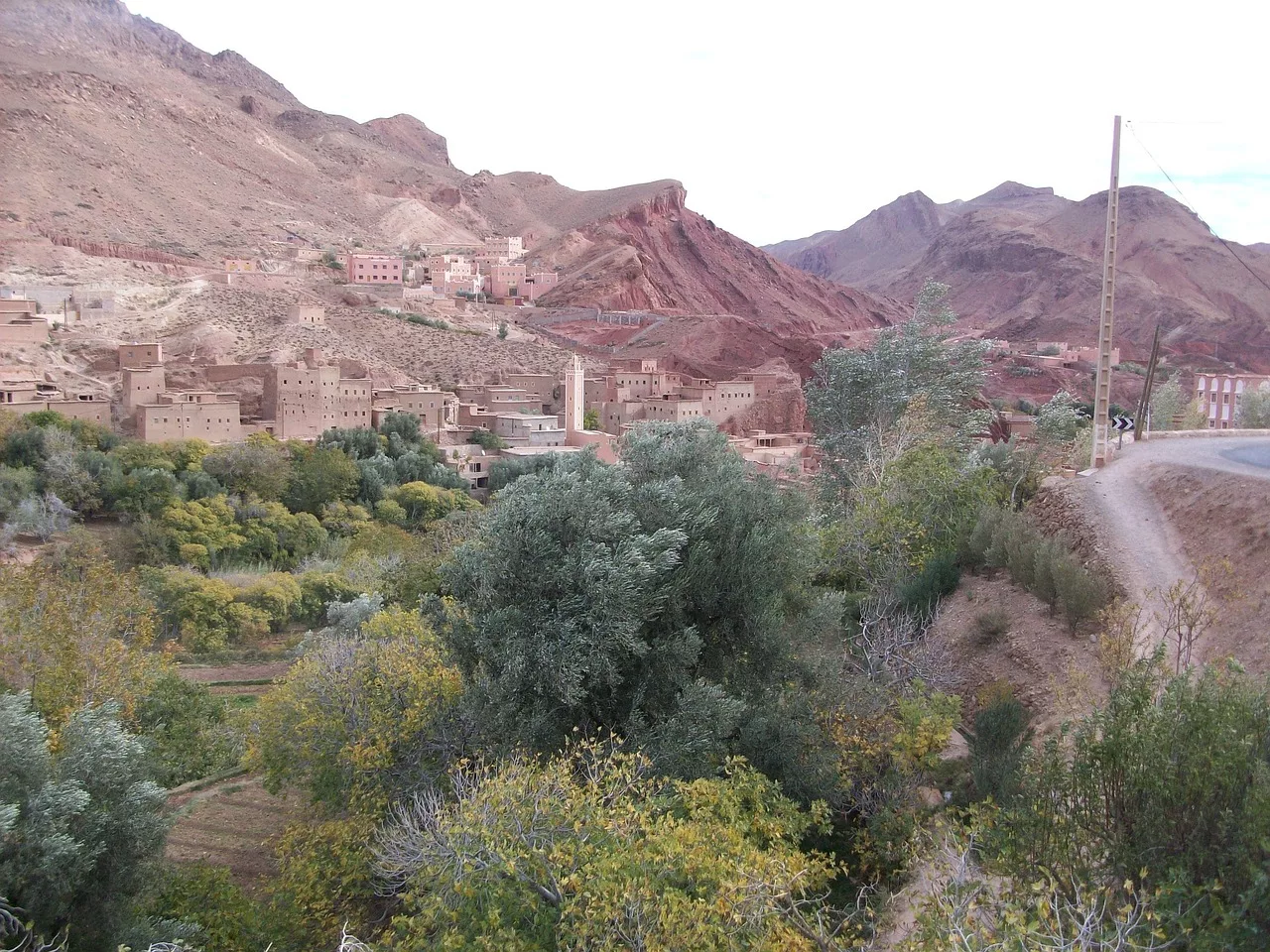
Jebel Toubkal, at 4,167 meters, is North Africa’s highest peak, and the gateway village of Imlil sits roughly 65 kilometers from Marrakech at 1,800 meters elevation, about a two-hour drive (Horizon Guides). That proximity to Marrakech is what makes Atlas trekking such a natural add-on to a desert tour: you can be on a mountain trail the same day you leave the city.
A standard Toubkal itinerary runs two days: hike from Imlil to the Toubkal Refuge on day one, then summit and descend on day two. It’s a non-technical trek that doesn’t require climbing gear, but the altitude and a genuine early-morning summit push mean a reasonable fitness level matters more than any prior mountaineering experience. Travelers combining this with a desert tour typically do the Atlas leg first, since the altitude adjustment is easier before several days of desert heat than after.
Shorter options exist for travelers who want a taste of the Atlas without a full Toubkal itinerary: day hikes from Imlil through Berber villages and the Imlil Valley cover similar scenery at a fraction of the effort, and many operators offer these as a half-day or full-day add-on to a Marrakech stay.
We can add a Toubkal day hike or an overnight in Imlil onto any private desert itinerary, just mention it when you get in touch or build it directly into a customized Morocco tour.
Is Morocco Safe for Solo and Female Travelers on Desert Tours?
Yes, in practical terms: solo and female travelers complete Morocco desert tours regularly and safely, but the trip works better when you plan around a few realities specific to this destination rather than assuming it behaves like Western Europe. A well-run desert tour is structurally low-risk, since you’re traveling with a known guide and a set itinerary rather than navigating independently.
Context matters here, and it’s worth being precise rather than alarmist about it. Morocco ranked 114th of 177 countries in the Georgetown Institute’s 2023/24 Women, Peace and Security Index, with a score of 0.637 and comparatively strong sub-scores in areas like education, financial inclusion, and mobile access (Georgetown Institute for Women, Peace and Security). That index measures a broad set of national conditions, not desert-tour safety specifically, and it’s one data point among many rather than a verdict on trip risk. In practice, the most common friction solo female travelers report is persistent street attention and haggling pressure in cities, not incidents on organized desert tours themselves.
A few precautions make a real difference. Book through an operator with visible reviews and a real business registration rather than an unmarked street tout, and confirm you’ll have a named, assigned guide before you pay a deposit rather than an unspecified “driver on the day.” Dress modestly, particularly in smaller towns along the route, both as a cultural courtesy and to reduce unwanted attention. Share your itinerary and operator contact details with someone at home, and confirm the camp has separate or lockable sleeping arrangements if that matters to you.
Private Desert Tours pairs every guest with a personal local guide for the full trip rather than a rotating driver pool, which is part of why solo and female travelers make up a meaningful share of our bookings. See our customized tour options if you’d like to discuss route or camp preferences before booking.
How to Choose a Responsible, Sustainable Tour Operator
The Sahara supports a fragile ecosystem and a tourism economy built partly on camel treks, and not every operator treats either well. Use this checklist before booking:
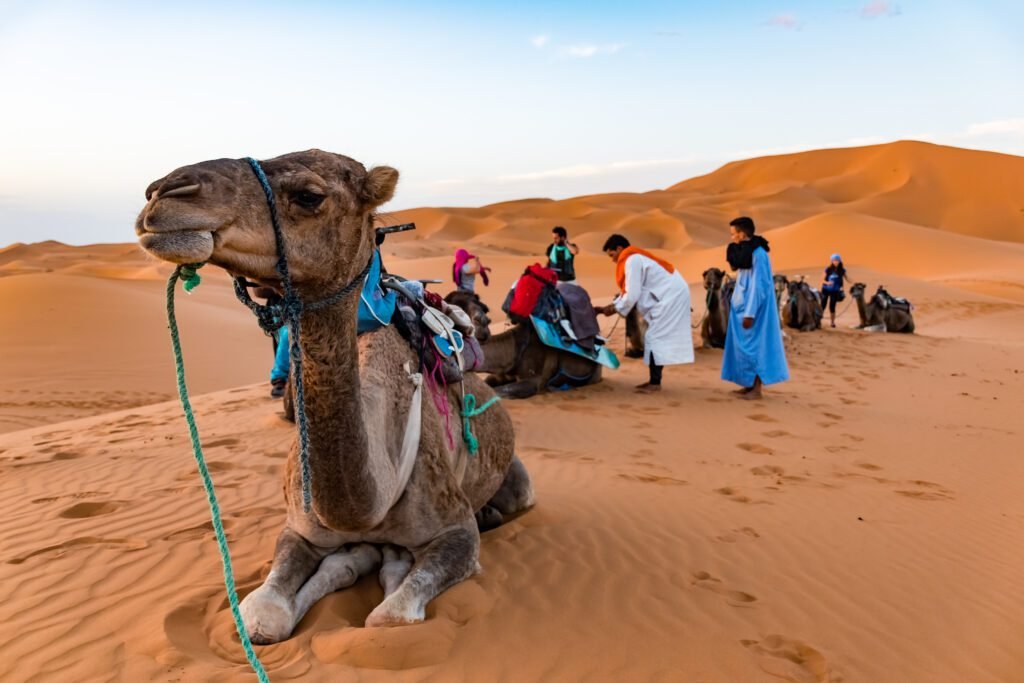
- Camel welfare: Ask how many hours per day camels work and whether they get rest days between treks. A well-run operator limits trek length and doesn’t overload camels with excess gear.
- Fair wages for guides and camel handlers: Ask whether guides and camel handlers are direct employees or subcontracted at the lowest possible rate. Tipping norms exist partly because underpaying local staff and relying on tourist tips to cover the gap is common; a transparent operator states wages and tipping expectations upfront rather than leaving it ambiguous.
- Waste management: Ask what the camp does with plastic waste, since Erg Chebbi and Zagora both see litter accumulation from high tourist volume. A responsible operator packs out trash rather than burying or burning it in the dunes.
- Local employment: Favor operators based in Morocco with local guides from the regions you’re visiting over foreign-owned agencies that subcontract everything to the lowest bidder.
- Camp and camel-train size: Smaller camps and smaller camel trains reduce both the environmental footprint and the strain on individual camels compared to mass-market operations running dozens of camels nightly.
None of these questions are awkward to ask, and any operator confident in its practices will answer them directly. Vague or dismissive answers are a real signal.
This is the standard we hold ourselves to at Private Desert Tours: our guides are hired locally from the regions they work in rather than subcontracted from elsewhere, and we run small, private groups instead of mass-market camel trains. Read more on our about us page.
Morocco Tourism Is Booming, Why Now Is a Good Time to Go
Morocco’s tourism sector has grown fast and consistently over the past two years, and the trend line has direct implications for adventure travelers: more availability now, but likely tighter capacity and higher prices in future peak seasons as demand keeps climbing.
Tourism Arrivals Are Accelerating
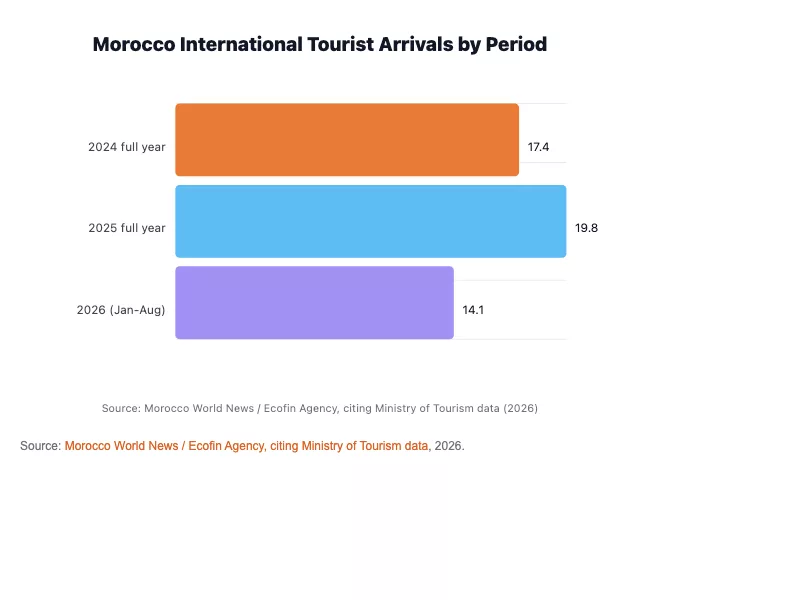
Government data cited by Morocco World News and Ecofin Agency puts 2025 full-year arrivals at roughly 19.8 million, a 14% increase over 2024, keeping Morocco ahead of Egypt as Africa’s most-visited destination (Morocco World News/Ecofin Agency, citing Ministry of Tourism data, January 2026). That momentum has continued into 2026: Morocco welcomed over 14.1 million tourists in the first eight months of the year, up from roughly 13.5 million in the same period of 2025, a 4.5% increase (Morocco World News, September 2026). Separately, first-half 2025 arrivals hit 8.9 million, a 19% year-over-year rise (Morocco World News, September 2025).
Tourism’s Growing Role in Morocco’s Economy
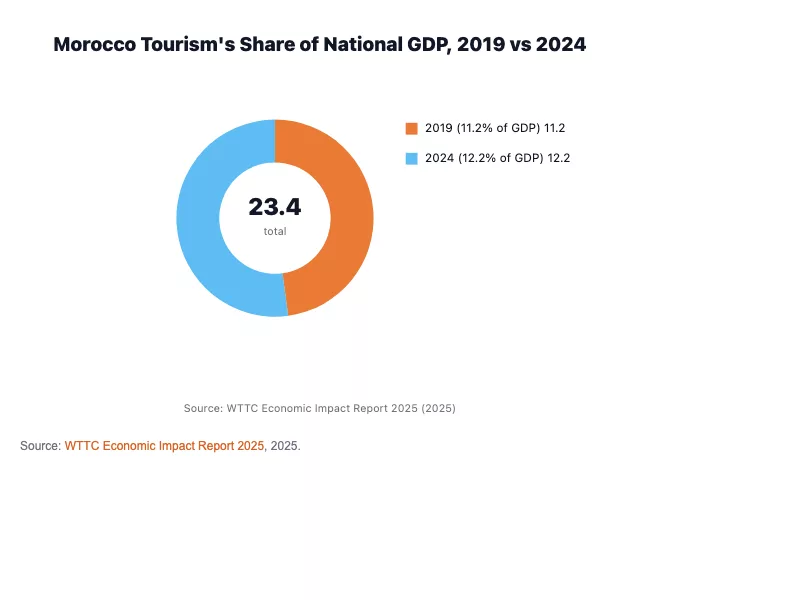
The growth isn’t just a headline number; it’s reshaping the economy. Travel and tourism contributed 12.2% of Morocco’s GDP in 2024, worth roughly $18.7 billion, and supported 1.4 million jobs, about 13.6% of total national employment. Morocco ranked 8th of 42 economies tracked in the World Travel & Tourism Council’s 2025 Economic Impact Report (WTTC, 2025).
What this means for planning: peak months (October-November and March-April, the same windows that offer the best desert weather) are seeing rising demand, and popular camps in Merzouga do sell out around holidays and festival dates. Booking your desert tour at least a few weeks ahead for shoulder-season travel is increasingly a good idea rather than an optional precaution. contact us early if you have specific shoulder-season dates in mind.
Frequently Asked Questions
Do I need a visa to visit Morocco?
Morocco is visa-exempt for stays up to 90 days for citizens of more than 60 countries, including the United States, Canada, the United Kingdom, all EU member states, Switzerland, Norway, Japan, and South Korea (Moroccan Consular Services). Morocco is also rolling out an AEVM electronic travel authorization for visa-exempt visitors, and requirements are actively evolving, so confirm the current rules on the official consular site before you book flights.
What should I pack for a Morocco desert tour?
Layers are essential: a breathable base layer and sun protection for daytime heat, plus a warm layer, hat, and gloves for cold desert nights, especially outside the June-September window. Add a headscarf or buff for sandstorms, a reusable water bottle, sturdy closed-toe shoes for dune walking, and a basic first-aid kit with rehydration salts.
What fitness level do I need for a desert tour or Atlas trek?
A standard desert tour, including the camel trek, requires no particular fitness; anyone comfortable sitting on a camel for one to two hours can do it. A Toubkal summit trek is more demanding: you’ll want a solid baseline of hiking fitness and some comfort with multi-hour days at altitude, though no technical climbing skill is required.
Is a private tour worth it for a Morocco desert trip?
Yes, for most travelers. A private tour gets you your own vehicle and a dedicated guide for the full trip, with full control over pace, stops, and departure times, which matters more than most first-time bookers expect once you’re three days into a fixed itinerary that skips something you actually wanted to see. It’s why Private Desert Tours runs 100% private trips at every price tier: we’ve found it’s the better experience for solo travelers, couples, families, and groups of friends alike, not just a premium option for people with money to spend.
See our private Morocco tour packages to compare routes and pricing directly.
Conclusion
The best Morocco desert tour comes down to matching route, season, and tier to your actual trip: a 3-day Marrakech-Merzouga loop for a tight schedule, a 4-day Zagora or Dades Gorge route for more scenery per day, a 5-day desert-to-Chefchaouen combination for something less typical, and shoulder-season timing (October-November or March-April) for the most comfortable conditions in the dunes. Price alone doesn’t tell you much; what an operator includes, how it treats its camels and staff, and how transparently it answers safety and sustainability questions tell you far more than a quoted rate.
Before you book, ask the camel-welfare and wage questions from the checklist above, confirm you’ll have a named private guide rather than a driver pool, and check your visa and AEVM status on Morocco’s official consular site given how recently those rules have changed.
If you’d rather skip the comparison shopping, get in touch with Private Desert Tours and we’ll build a private itinerary around your dates, budget, and the routes covered in this guide.
This guide is brought to you by the team at Private Desert Tours, a local, family-run Morocco tour operator based in Mhamid El Ghizlane, specializing in 100% private, tailor-made desert and Atlas Mountain itineraries.
Tags: #bestmoroccodeserttours, #besttourtomorocco, #deserttoursmorocco, #privatedesertmoroccco, #PrivateMoroccoTours
Popular Tour Packages
 private tour with Private Desert Tours was exceptional from start to finish. We traveled fr - We booked a private tour with Desert Private tours for our 20th anniversary, and it turned out to be the most unforgettable trip we’ve ever taken. The entire experience was... read more
 sail d
16/11/2025- We highly recommend this agency to anyone looking for a well-organized and authentic desert adventure - We had an amazing experience with Private Desert Tours. The organization was absolutely excellent from start to finish. Everything was perfectly arranged, and the team made sure that every detail... read more Cécile M
01/03/2026 - A great option for solo travellers - I had an awesome 9 day tour in December with Ismael. He adjusted my itinerary to suit my liking and also to adapt for some unpredicted weather - making... read more Voyager829604
14/01/2026 - Fantastic 10 day tour of Morocco - A fantastic 10 day tour of Morocco including Marrakech, Dades Valley, Sahara, Fez, Chefchaouen, Rabat and Casablanca. The initial planning and response to questions was very efficient. Great accommodation was... read more Chris S
29/09/2026